
Most homeowners only think about their plumbing when something goes wrong. A sink that takes too long to drain, a drop in shower pressure, or a faint smell that lingers from the kitchen drain.
By the time you notice these things, the problem has usually been building for a while. And more often than not, it could have been caught earlier with a few simple checks.
You don’t need to be a plumber yourself, but it’s important to build the habit of paying attention to your home’s plumbing system so small issues stay small. Regular home plumbing maintenance saves money, protects your property, and gives you a clear picture of when something is fine to handle on your own or when it is time to call in a professional.
In this guide, we cover what you need to know about DIY plumbing maintenance and where to draw the line before a simple fix turns into a bigger, more expensive problem.
Understanding Your Home’s Plumbing System
You do not need to be an expert in your home plumbing system to look after it properly. But knowing the basics gives you a real advantage when something starts to change.
Your home’s plumbing system has two jobs: delivering clean water in and moving wastewater out. It relies on a network of supply pipes, drainage pipes, fixtures (taps, toilets, showers), hot water units, and valves. Most of it is hidden. But the parts you can see tell you a lot about the parts you can’t.
Here are some early warning signs that most homeowners miss…or leave unattended for too long:
- Water that looks discoloured, rusty, or cloudy when you first turn a tap on
- Drains that empty slowly, even after clearing visible debris
- Unexpected gurgling or bubbling sounds from pipes or drains
- Damp patches on walls, ceilings, or floors with no obvious source
- Musty or earthy smells near wet areas, even when everything looks dry
- A noticeable drop in water pressure across multiple fixtures
While some are straightforward to address, others are early signals of something that needs professional attention before it gets worse.
The Golden Rule of DIY Plumbing: Know Your Limits
There’s a clear difference between maintaining, repairing, and installing plumbing. Maintenance keeps things running smoothly, repairs fix faults, and installations involve changing the system itself. As you move along that scale, the level of risk, complexity, and potential for costly mistakes increases.
DIY plumbing is best for simple, low-risk tasks like cleaning a tap aerator, replacing a shower head, or clearing minor drain debris. These are quick jobs that most homeowners can safely handle. But plumbing systems are pressurised and governed by strict standards. A small mistake can lead to leaks, water damage, or insurance issues.
The Hidden Risks of YouTube Plumbing Hacks
Researching a plumbing issue before calling a professional is smart. However, a short video often makes a complex job look simple, and homeowners take it as a complete solution.
Online tutorials rarely account for real-world differences like pipe age, materials, water pressure, or past repairs. A fix that works in a new home may not apply to an older system with hidden issues. We’ve seen the results of well-meaning DIY attempts, and these small mistakes quickly turn into costly repairs.
The key takeaway is simple: understanding the problem is not the same as being qualified to fix it. If a tutorial skips safety, compliance, or when to call a professional, treat it with caution.
Daily Habits That Protect Your Plumbing
Plumbing maintenance is not just about scheduled checks. Some of the most effective prevention happens through everyday habits that most people overlook.
What Not to Pour Down Your Drains
Your drains are not a bin, and pouring the wrong things down the sink is one of the fastest ways to create a blockage. Cooking grease and oil are the biggest issues; they harden inside pipes and trap debris, leading to stubborn blockages that are difficult to clear without professional equipment.
Other things to keep out of your drains include coffee grounds, flour, rice, pasta, and paint. In bathrooms, only flush toilet paper and waste. Wet wipes, cotton buds, and sanitary products don’t break down properly, even if labelled “flushable.”
Smart Water Usage Practices
Your plumbing system is designed to handle normal household water flow. But when multiple high-demand fixtures run at once, or when pressure builds up in ageing pipes, it puts excess strain on your system.
Avoid running the dishwasher and washing machine at the same time, fix dripping taps quickly, and get water pressure changes checked early. Small, consistent habits like these extend the life of your plumbing and reduce the chance of unexpected failures.
Plumbing Maintenance Tools and Products Worth Having
You don’t need a full plumber’s toolkit to handle basic maintenance. Having a few essentials on hand can help when small issues arise. Here is what we recommend keeping at home:
- Adjustable wrench: For tightening or loosening tap fittings and supply connections
- Plunger (cup-style for sinks, flange-style for toilets): Your first response for minor blockages
- Thread tape: Wrap around threaded connections to prevent leaks when replacing shower heads or tap fittings
- Drain strainers: Inexpensive mesh covers that catch hair, food, and debris before they enter the drain
- Bucket and old towels: For catching water during any under-sink work
- Torch: Essential for inspecting dark spaces under sinks, behind toilets, and in ceiling cavities
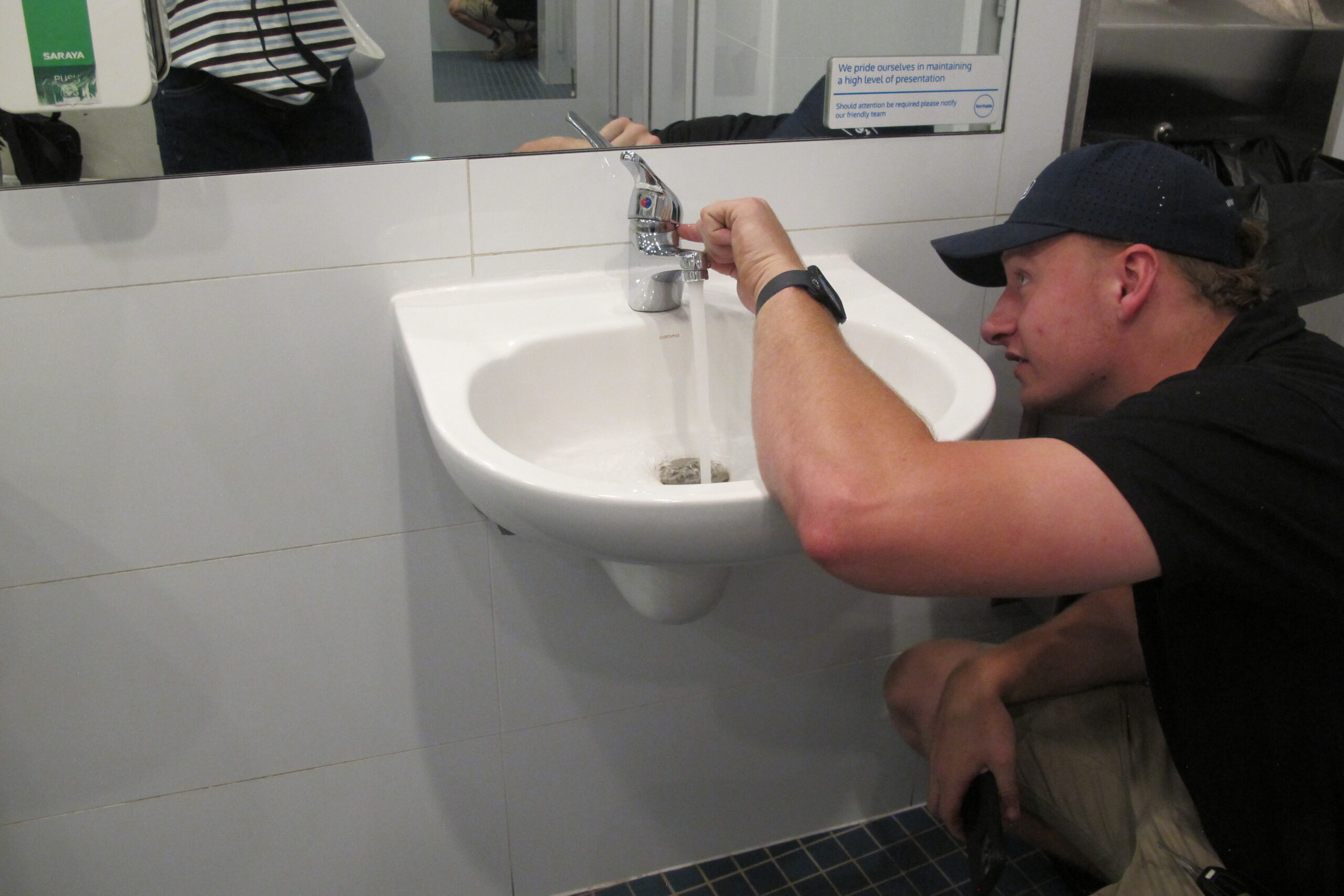
5 Safe DIY Tasks Homeowners Can Do
1. Cleaning Tap Aerators for Better Water Flow
If your water flow is weak, uneven, or even spraying in different directions, the issue is usually a clogged aerator. This is the small mesh screen at the end of your tap that regulates flow and improves efficiency. Over time, it collects mineral build-up and sediment, especially in hard water areas.
How to clean it:
- Unscrew the aerator by hand (use a cloth and pliers if it’s stuck)
- Take apart the internal components carefully
- Soak them in white vinegar for 15–30 minutes
- Scrub with an old toothbrush, rinse, and reassemble
- Screw back on and test the flow
If it’s damaged or cracked, replacement aerators are inexpensive and widely available. This is one of the quickest fixes with instant results.
2. Replacing Shower Heads: A Quick Upgrade with Real Impact
Over time, mineral deposits clog the nozzles, seals degrade, and older models can use significantly more water than modern alternatives. If your shower pressure has dropped or the spray pattern is inconsistent, replacing the head is a quick upgrade that anyone can do.
Here is how:
- Unscrew the old shower head by hand. If it will not budge, wrap a cloth around the fitting and use an adjustable wrench.
- Clean the exposed threads on the shower arm. Remove old tape or residue.
- Wrap three to four layers of PTFE tape clockwise around the threads. This creates a watertight seal.
- Screw the new shower head on by hand. Tighten gently. Do not overtighten or you risk cracking the fitting.
- Turn the water on and check for leaks around the connection.
💡 When choosing a new shower head, look for a WELS (Water Efficiency Labelling and Standards) rating of 3 stars or higher. These use less water without compromising on pressure, and they can lower your water bill over time.
3. Checking for Visible Leaks Before They Become Costly
Leaks often start small and hidden, and by the time you notice them, the damage is already underway. A quick visual check once a month can save you thousands in repairs. Here is where to look:
- Under kitchen and bathroom sinks: Check the pipe joints, the base of the tap, and the trap (the U-shaped pipe). Any moisture, discolouration, or dripping is a red flag.
- Around the toilet base: A toilet that rocks slightly, or a damp patch where the base meets the floor, often signals a failing wax seal.
- Exposed pipes in laundries, garages, or ceiling cavities: Look for green or white corrosion, dampness, or water staining.
- Behind the washing machine: Hose connections loosen over time. A quick visual check can catch a slow drip before it turns into a flooded laundry.
If you find a leak you can see and access, turn off the water supply to that fixture and monitor it. For anything behind a wall, under a slab, or connected to the mains, call a professional. Hidden leaks need proper diagnostics.
4. Maintaining Toilet Cisterns for Reliable Flushing
A running toilet is a problem that seems minor until you see your next water bill. A continuously running cistern can waste thousands of litres a month. Fortunately, most fixes are straightforward.
Inside the cistern, focus on two parts:
- The float arm (or float valve): This controls the water level. If the water keeps running after a flush, the float may be sitting too high, allowing water to overflow into the overflow tube. Gently bend the float arm down slightly so it shuts off the valve earlier.
- The flapper valve (or flush valve seal): This sits at the base of the cistern and lifts when you press the flush button. If it is warped, cracked, or has debris stuck to it, water will leak from the cistern into the bowl constantly. Clean the seal or replace it if it looks worn.
Both adjustments are safe and take minutes. But if the cistern continues to run after these basic checks, or if the internal components look corroded or damaged, that is a job for a professional toilet and tap repair.
5. Clearing Minor Surface Drain Debris
A slow-draining shower or basin does not always mean a serious blockage. In most cases, it is surface debris that has built up just inside the drain opening: hair, soap scum, and toothpaste residue.
Here is how to handle it safely:
- Remove the drain cover or pop-up plug. Most lift out or unscrew easily.
- Use your fingers (with gloves) or a pair of needle-nose pliers to pull out any visible hair and debris.
- Flush the drain with hot water from the tap for 30 seconds to clear remaining residue.
- Replace the drain cover and test the flow.
💡 Fitting a mesh drain strainer over your shower and basin drains can catch the bulk of debris before it enters the pipe.
⚠️ Avoid using chemical drain cleaners. These products are corrosive, damage your pipes over time, and often make the problem worse. If a surface clean does not fix the flow, it is time to call in a professional with the right equipment.

What Should Always Be Left to Professionals
Knowing what you can do is valuable. Knowing what you should not do is just as important. The tasks below carry real safety, legal, and financial risks. Some plumbing tasks carry real safety, legal, and financial risks and require licensing, specialist tools, and experience far beyond a DIY guide or online tutorial.
1. Gas Plumbing: Why It Is Never DIY
This one is non-negotiable. Gas plumbing is strictly regulated in Australia and must only be carried out by a licenced gas fitter.
Gas leaks can be difficult to detect. It is odourless in its natural state, which is why a chemical additive is used to help identify leaks. Even so, a loose-fitting or damaged line can allow gas to build up in enclosed spaces, creating risks including fire, explosion, or carbon monoxide poisoning.
There is no safe DIY approach here. If you ever suspect a gas leak, turn off the supply at the meter, ventilate the area, leave the property immediately, and contact your gas provider and a licenced professional.
2. Hot Water Systems: Complex, Pressurised, and Risky
Hot water systems combine water, pressure, electricity (or gas), and high temperatures in a single unit. That combination leaves no room for guesswork.
Incorrect handling can lead to scalding, pressure failures, flooding, electrical hazards, or complete system breakdown. Even minor adjustments, like thermostat settings, can create safety risks or reduce system efficiency.
Common warning signs include inconsistent water temperature, rust-coloured water, unusual noises, leaks around the unit, or pooling at the base.
Regular servicing by a licensed plumber ensures safe operation and often extends the life of the system, preventing premature and costly replacement.
3. Major Pipe Alterations and Installations
Moving, rerouting, or adding to your home’s pipe network is not a maintenance task. It is construction work that falls under building codes and plumbing regulations.
Incorrect installations can lead to low water pressure, backflow contamination, hidden leaks, and drainage failures that may take months to surface. By the time they do, the damage is often extensive and expensive.
All pipe alterations must comply with building codes and be completed by a licensed plumber who can certify the work. This is especially important during renovations or fixture upgrades.
Planning changes to your plumbing layout? Talk to our team about pipe relining and alterations.
4. Waterproofing: The Hidden Risk Behind Bathrooms
When waterproofing fails, damage often goes unnoticed until it becomes severe, with moisture, mould, or structural deterioration appearing long after the work was done.
In NSW, waterproofing must comply with Australian Standard AS 3740 and be completed or supervised by a licenced professional. Without proper certification, insurance claims may also be affected if water damage occurs.
5. Drain Chemicals: The Silent Pipe Destroyers
Store-bought chemical drain cleaners are often marketed as a quick fix. In reality, they are one of the worst things you can pour into your plumbing.
These products use caustic or acidic compounds to dissolve blockages, but do not discriminate between the blockage and your pipes. Over time, repeated use weakens pipe walls, corrodes joints, and can cause failures.
They are also a temporary fix at best. Chemicals only dissolve enough to let water trickle through, giving the impression that the problem is solved, while the root of the problem continues to build deeper in the system.
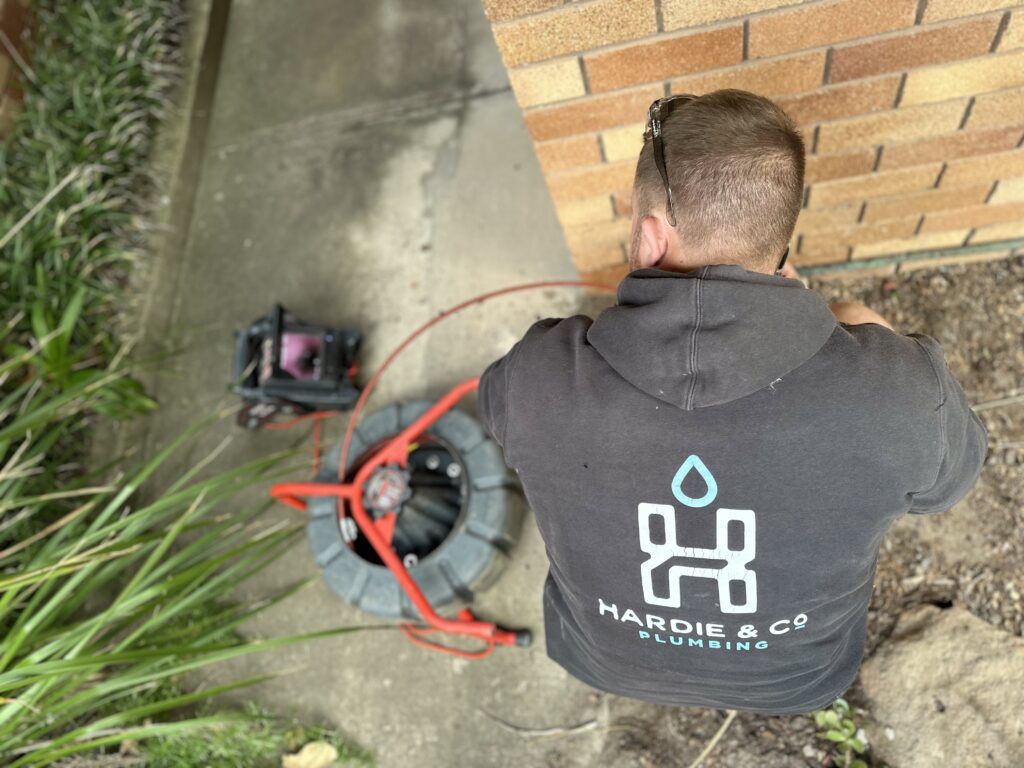
If a plunger and a surface clean do not fix a slow drain, the right move is to call a plumber who can use a proper drain camera and mechanical equipment to clear and inspect the line.
6. Anything Inside Walls or Under Slabs
If you cannot see it, you shouldn’t touch it. Plumbing that runs inside wall cavities, beneath concrete slabs, or through ceiling spaces is out of reach for a reason.
Cutting into a wall to chase a leak or attempting to reroute a pipe without knowing what else runs through that space (electrical wiring, structural supports, other services) creates serious risk. And if a concealed pipe is leaking, the water has usually been travelling along surfaces and pooling in places you don’t expect, meaning the source of the leak is rarely where the damage appears.
At Hardie & Co, our plumbers use thermal imaging cameras, acoustic leak detection, and CCTV drain inspections to locate problems without tearing your home apart, allowing us to pinpoint the issue accurately so repairs are targeted, efficient, and minimally invasive.
Insurance and Compliance: What Homeowners Need to Know
When it comes to plumbing maintenance and repairs, your home insurance may not cover damage caused by unlicensed plumbing work.
In NSW, most plumbing work must be carried out by a licensed plumber or under their supervision. This includes anything beyond basic maintenance, such as:
- Pipe connections and alterations
- Drainage work
- Hot water systems
- Gas fitting
- Waterproofing
When this work is completed correctly, the plumber must issue a Certificate of Compliance (plumbing compliance certificate). This document confirms that the work meets the Plumbing Code of Australia and Australian Standards. Without it, there is no official proof that the work was completed to standard. If something goes wrong, insurers may request evidence of compliance, and claims can be reduced or denied if it cannot be provided.
When to Call a Professional Plumber
Some plumbing issues give you time. Others don’t. Knowing the difference helps you respond appropriately and avoid making a manageable situation worse.
Call immediately if:
- You smell gas anywhere in or around your home
- A pipe has burst, and water is flowing uncontrolled
- Sewage is backing up through drains or toilets
- You have no hot water, and the unit is making unusual sounds or leaking
- There is flooding that you cannot stop by turning off a fixture valve
Book a professional assessment if:
- A toilet runs continuously after basic cistern adjustments
- Water pressure has dropped noticeably across multiple fixtures
- You notice persistent damp, mould, or musty smells with no obvious source
- Your hot water system is more than 10 years old and has not been serviced
- You are planning any renovation that involves plumbing relocation
The earlier you act, the better. That applies to both emergency and non-urgent situations. Waiting rarely makes a plumbing problem cheaper.
At Hardie & Co, we believe the best plumbing outcomes start with informed homeowners. Our approach is advice-first. We take the time to assess the issue properly, explain what’s going, and provide upfront pricing before any work begins.
Confidence at Home, Experts When It Counts
Plumbing maintenance does not need to be complicated. Regular checks, the right habits around your drains and fixtures, and a clear understanding of where DIY ends and professional work begins.
Cleaning aerators, replacing shower heads, checking for visible leaks, adjusting toilet cisterns, and clearing surface drain debris are simple fixes. For everything else, from gas work and hot water systems to pipe alterations and waterproofing, a licenced plumber is the only safe option.
Good plumbing is about prevention, not reaction. Stay proactive, stay cautious, and when you need a hand with something beyond the basics, we are here!
Need professional plumbing advice or a quote?