
We all need hot water. It’s hard to imagine starting the day without a shower, washing the dishes, or tackling the laundry without it! Most of the time, it’s something we barely think about… until it stops working.
What many homeowners don’t realise is that the type of hot water system you choose can have a bigger impact on your budget than you might expect. In fact, hot water accounts for over 25% of total energy use in the average Australian home, which means your choice of system plays a major role in your ongoing utility bills.
But, with so many different hot water systems on the market, finding the right one isn’t just a quick decision. It’s an investment, and one you want to get right!
While all hot water systems do the same job (heating water for everyday use) they differ in how they operate and how energy is used. Understanding these differences can help you choose a system that suits your household size, budget, and energy goals.
The 5 Most Common Types of Hot Water Heating Systems
1. Electric Hot Water Systems
Electric hot water systems are the most common and widely used option in Australia, found in around 50% of households. They’re a familiar, reliable solution and often the go-to choice for homes without gas connections or those looking for a straightforward installation.
Electric systems come in two main formats: storage and instantaneous (continuous flow).
- Storage systems use an insulated tank fitted with one or more electric heating elements. These elements heat the water and maintain it at a safe, usable temperature. As hot water is drawn from the top of the tank, cold water enters from the bottom and is reheated. Many households pair these systems with off-peak electricity tariffs, allowing water to heat overnight at a lower cost.
- Instantaneous electric systems work without a tank. Simply put, when you turn on a hot tap, sensors activate the heating elements and water is heated as it flows through the unit. The result is hot water on demand, without the energy loss associated with storing heated water.
Pros and cons of electric hot water systems
| Advantages | Disadvantages |
| Lower upfront purchase and installation costs | Higher running costs compared to gas or heat pump systems |
| Simple installation with no gas connection required | Larger carbon footprint unless powered by renewable energy |
| Can be installed indoors or outdoors | Off-peak systems may require larger tanks |
| Compatible with off-peak electricity rates | Instantaneous units can struggle with high simultaneous demand |
| Long lifespan (typically 10–15 years) | No hot water during power outages |
| Pairs well with solar PV systems using timers or diverters | Storage tanks lose some heat even when not in use |
Best use cases
- Apartments and homes with limited space: Compact storage tanks or instantaneous units fit easily where space is tight.
- Properties without access to natural gas: Perfect for areas where gas connections aren’t available.
- Small households with lower hot water usage: Smaller tanks or tankless units keep running costs reasonable.
- Homes with existing solar panels: Electric systems can be paired with solar PV to heat water during the day, reducing energy bills.
- Rental properties where upfront cost matters: Low installation costs make them ideal for landlords.
- Straightforward replacements using existing electrical infrastructure: Minimal plumbing or electrical changes are required for upgrades.
2. Gas Hot Water Systems
Gas hot water systems are the second most common choice in Australia, used in nearly one-third of homes. They’re known for fast heating, reliable performance, and lower running costs compared to standard electric systems.
Gas hot water systems use natural gas or LPG to heat water and are available in several configurations, including:
- Gas storage systems heat water in an insulated tank using a gas burner located at the base of the unit. Because gas heats water faster than electricity, these systems can deliver hot water more quickly and often require a smaller tank to meet the same demand. Heated water is stored and ready to use, making storage systems a reliable option for families who use multiple hot water outlets at once.
- Instantaneous (continuous flow) gas systems take a different approach. Instead of storing hot water, they heat it only when you turn on a tap. Cold water passes through a heat exchanger, where a gas burner rapidly raises it to the desired temperature. This on-demand process means you get a continuous supply of hot water without the energy losses associated with keeping a tank hot, improving overall efficiency.
Pros and cons of gas hot water systems
| Advantages | Disadvantages |
| Lower running costs than electric systems (often up to 20% less) | Higher upfront purchase and installation costs |
| Faster heating and recovery times | Most units must be installed outdoors for ventilation |
| No peak or off-peak pricing fluctuations | Relies on fossil fuels with rising long-term costs |
| Some models continue working during power outages | Shorter average lifespan than electric systems |
| Clear energy efficiency ratings | Requires regular maintenance for safety |
Best use cases
- Homes already connected to natural gas: No need for extra infrastructure or expensive retrofitting.
- Large families with high hot water demand: Storage and continuous flow options can deliver hot water to multiple taps at once.
- Properties running multiple taps simultaneously: Ideal for busy households with showers, baths, and laundry happening at the same time.
- Cooler climates where electric systems struggle: Gas heats water faster, maintaining performance in colder conditions.
- Homes aiming to reduce electricity usage: Gas systems can lower household electricity bills while still providing reliable hot water.
3. Solar Hot Water Systems
Solar hot water systems use the sun to heat water, making them one of the most environmentally friendly options available. In the right conditions, they can cut water heating costs by up to 80%.
Put simply, solar collectors installed on the roof absorb heat from sunlight and transfer it to water stored in an insulated tank. Roof-mounted solar collectors absorb heat from sunlight and transfer that heat to water stored in a well-insulated tank. This process dramatically reduces the amount of energy needed from traditional power sources.
To ensure reliable hot water year-round, most solar systems include a gas or electric booster. The booster automatically activates during cloudy weather, overnight periods, or times of high water usage, so you’re never left without hot water.
Solar hot water systems are generally available in two main designs:
- Close-coupled (thermosiphon) systems have both the solar collectors and the storage tank mounted on the roof. These systems rely on natural convection, where hot water rises and cold water sinks so no pump is required. They’re typically simpler in design and well-suited to homes with strong roof structures.
- Split systems place the solar collectors on the roof while the storage tank sits at ground level or inside the home. A small pump circulates water between the collectors and the tank. This design offers more flexibility, reduces roof load, and is often preferred for modern homes or properties with limited roof strength.
Both system types can be paired with different collector technologies, such as flat panels or evacuated tubes, allowing homeowners to choose a setup that best suits their climate, roof layout, and hot water needs.
Pros and cons of solar hot water systems
| Advantages | Disadvantages |
| Significant long-term energy bill savings | Higher upfront costs |
| Low environmental impact | Performance depends on weather and roof orientation |
| Eligible for government rebates and incentives | Requires sufficient roof space |
| Long lifespan (15–25 years) | Close-coupled systems may need roof reinforcement |
| Minimal maintenance |
Best use cases
- Homes in sunny locations: Maximise energy collection and reduce reliance on electricity or gas.
- Properties with north-facing roof space: Ensures optimal sunlight exposure for efficient heating.
- Families with high hot water usage: Large storage tanks heated by solar energy can meet heavy daily demand.
- Long-term homeowners: Upfront investment pays off over many years with reduced running costs.
- Environmentally conscious households: Lower greenhouse gas emissions and energy consumption.
4. Heat Pump Hot Water Systems
Heat pump hot water systems are one of the most energy-efficient ways to heat water. Instead of generating heat directly, they work like a reverse air conditioner. Air passes over a refrigerant, which absorbs and transfers the heat to water in an insulated tank, using far less electricity than traditional electric systems.
Even in cooler weather, there’s usually enough ambient heat for the system to operate effectively. Heat pumps can use around 60–75% less energy than traditional electric storage systems, leading to significant savings over time.
While they still rely on electricity, their efficiency makes them a popular choice for households aiming to reduce energy bills and emissions, and they work well alongside solar power for even greater savings.
Pros and cons of heat pump systems
| Advantages | Disadvantages |
| Extremely low running costs | Higher upfront cost |
| Major reductions in greenhouse gas emissions | Efficiency varies with climate |
| Works well with solar PV systems | Requires good airflow |
| Reliable performance day and night | Some units produce low-level noise |
Best use cases
- Homes with solar panels: Work well alongside solar PV to further cut running costs.
- Properties without gas connections: Provides a low-energy alternative to electric or gas systems.
- Households focused on energy efficiency: Uses 60–75% less electricity than standard electric storage units.
- Homes with limited roof space for solar hot water: Ideal when a roof-mounted solar system isn’t feasible.
5. Instantaneous (Continuous Flow) Hot Water Systems
Instantaneous hot water systems, also known as continuous flow or tankless systems, heat water only when you need it, rather than storing it in a tank. This delivers hot water on demand, reduces energy waste, and avoids standby heat loss.
When a hot tap is turned on, cold water flows through a heat exchanger and is rapidly heated by a gas burner or electric element. Many models also use smart controls to adjust output based on flow rate and temperature, ensuring consistent hot water even when multiple taps are running.
Because there’s no storage tank, these systems are compact and wall-mounted, making them ideal for smaller spaces. They typically last longer than traditional storage systems, often exceeding 20 years with proper maintenance. While upfront costs can be higher, the efficiency and convenience of endless hot water make them a popular choice.
Pros and cons of instantaneous systems
| Advantages | Disadvantages |
| Unlimited hot water supply | Higher upfront cost |
| Improved energy efficiency | Limited flow rate during simultaneous use |
| Compact, space-saving design | May require electrical or gas upgrades |
| Long lifespan (often 20+ years) | Performance affected by cold groundwater temperatures |
Best use cases
- Smaller households: Provides enough hot water without storing large volumes.
- Homes with limited space: Wall-mounted units save floor and roof space.
- Properties with staggered water usage: Efficient for households where taps aren’t used simultaneously.
- Point-of-use applications like remote bathrooms or appliances: Can be installed near taps or showers for instant hot water without running long pipes.
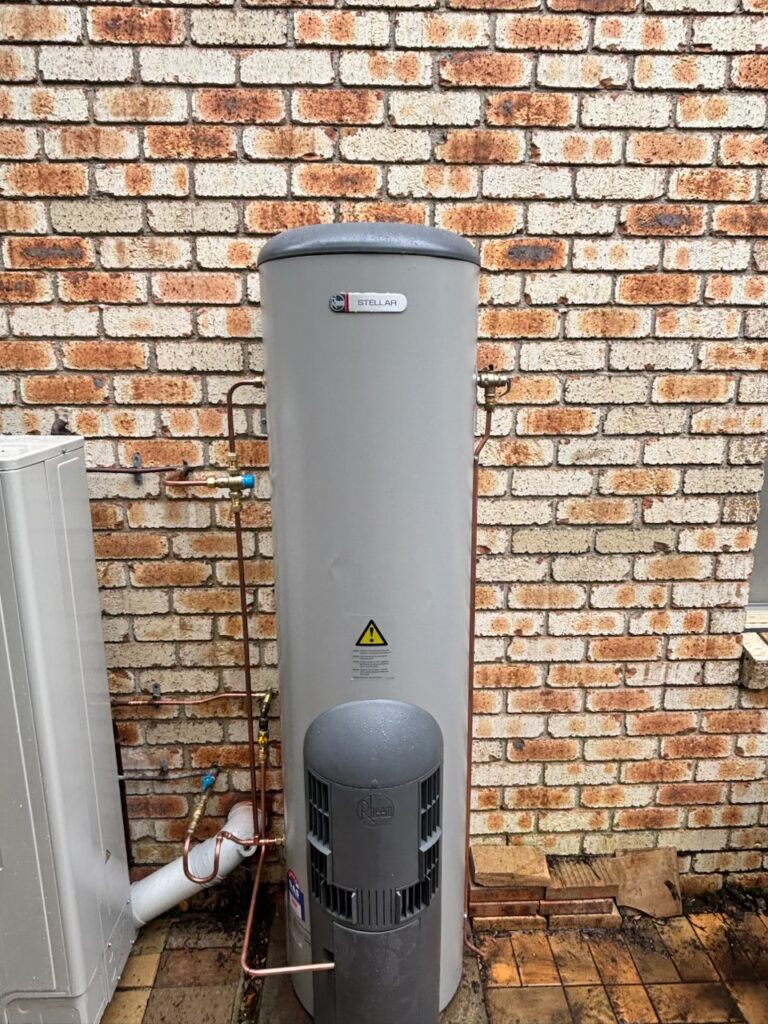
How to Choose the Best Hot Water System for Your Home
While price is a major factor when it comes to choosing an appliance as large as a hot water heater, it shouldn’t be the only consideration. Here are some of the most important considerations:
1. Consider Household Size and Usage Patterns
The size of your household plays a big role in determining how much hot water you’ll need. On average, each person uses around 50 litres of hot water per day. To avoid running out, most households choose a tank that holds roughly 1.5 days’ worth of water.
💡For example, a family of 3–4 usually needs a 300-litre tank, even if fewer people currently live there.
Your usage patterns matter too. Think about when your household needs hot water the most. Are multiple showers running in the morning? Do you often use the dishwasher and washing machine at the same time?
A system that’s too small will leave you with cold showers, while one that’s too large wastes energy keeping extra water hot. A licensed plumber can help calculate the right size and capacity based on your daily demand.
2. Compare System Types and Energy Sources
Hot water systems vary in how they heat, store, and deliver water, and the right choice depends on your household’s needs and priorities.
Some systems keep hot water ready for use, while others heat it only when needed. Certain options prioritise energy efficiency and lower running costs, while others focus on consistent performance during periods of high demand. Climate, household size, daily usage patterns, and available energy sources all play a role in how well a system performs.
3. Evaluate Costs and Efficiency
When comparing hot water systems, it’s important to look beyond the upfront price and consider long-term efficiency and running costs. A system that’s cheaper to buy may cost more to operate over time, while a more efficient option can deliver substantial savings in the long run.
- Upfront costs include the price of the system itself and installation. Some options, like solar or heat pump systems, typically require a higher initial investment.
- Running costs depend on the system’s energy efficiency, your household size, and how much hot water you use. Efficient systems, such as solar or heat pumps, use less energy to heat the same amount of water, which can significantly reduce your monthly bills. Over time, these savings can often outweigh the higher purchase price.
💡Look for the Uniform Energy Factor (UEF) or other energy efficiency ratings provided by the manufacturer. A higher UEF indicates that the system converts energy into hot water more effectively, which translates to lower running costs and a smaller environmental footprint.
Explore rebates and incentives
Did you know that many high-efficiency or renewable hot water systems are eligible for government rebates or incentive? These programs can help offset part of the upfront cost, making systems like solar and heat pumps more affordable.
Rebates may vary depending on your location, system type, and energy source, so it’s worth checking local government programs!
4. Consider Space and Installation
Before choosing a hot water system, think about where it will be installed and whether your home can accommodate it. Space, airflow, roof access, noise, and structural support can all affect performance, safety, and lifespan.
Some systems require more room than others, may need outdoor clearance or roof space, or rely on good ventilation and easy access for maintenance. It’s also important to consider proximity to living areas, neighbouring properties, and existing plumbing or power connections.
Professional installation is essential. A licenced plumber will ensure the system is correctly sized and installed, helping to maximise efficiency, maintain safety, and reduce the risk of breakdowns or costly repairs over time.
5. Final Checklist Before Buying
Before you commit to a system, ask yourself:
- Does it meet your peak hot water demand?
- Is the energy source available and cost-effective (gas, electricity, or both)?
- What are the total costs, including installation and running expenses?
- Are there rebates or incentives available?
- Is there enough space for the system you’re considering?
- Will it be professionally installed by a licensed plumber?
💡Not sure of the answers? We can help! Whether it’s sizing, system type, or installation advice, we can guide you to the best solution for your home.
Comparisons At A Glance
| Feature / System Type | Electric (Storage & Tankless) | Gas (Storage & Tankless) | Solar Hot Water | Heat Pump | Instantaneous (Tankless / Continuous Flow) |
| How it Works | Heats water using electric elements, stored in tank or on-demand | Heats water using a gas burner, stored in tank or on-demand | Solar collectors heat water in a tank, with gas/electric booster for cloudy days | Pulls heat from surrounding air and transfers it to water in a tank | Heats water on-demand using gas or electric elements |
| Energy Source | Electricity | Natural gas or LPG | Solar + gas/electric backup | Electricity | Electricity or Gas |
| Efficiency | Moderate (EF ~0.9) | Higher than electric (EF ~0.5–0.7) | Very high, can reduce bills by 50–80% | Very high, 60–75% less energy than standard electric | High, heats water only when needed |
| Upfront Cost | Low to moderate | Moderate to high | High | High | Moderate to high |
| Running Costs | Higher than gas; can be lowered with off-peak or solar | Lower than electric | Very low (mainly booster use) | Low | Moderate; highly efficient for smaller households |
| Lifespan | 10–15 years | 8–12 years | 15–25 years | 15–20 years | 20+ years |
| Space Requirements | Tankless: small, wall-mounted; storage: requires tank space | Storage: tank required; tankless: wall-mounted | Requires roof space for collectors; tank may be roof or ground | Needs outdoor space for unit and tank | Wall-mounted, compact; minimal floor space |
| Best for | Small households, apartments, homes without gas, solar integration | Large families, homes with gas, multiple taps running, cooler climates | Sunny locations, long-term homeowners, environmentally conscious households | Homes with solar, energy-conscious households, limited roof space | Small to medium households, homes with staggered water usage, point-of-use applications |
| Pros | Low upfront cost, easy installation, compatible with solar | Fast heating, lower running costs, works in power outages | Eco-friendly, long-term energy savings, eligible for rebates | Highly energy-efficient, lower running costs, works day and night | Endless hot water, energy-efficient, space-saving, long lifespan |
| Cons | Higher running costs, storage tanks lose heat | Higher upfront cost, requires ventilation, carbon footprint | High upfront cost, needs roof space, booster required for cloudy days | High upfront cost, needs space and airflow, can be noisy | Higher upfront cost, limited flow rate, may need electrical/gas upgrades, performance affected by cold water |
Choosing the Right Hot Water System
Choosing the right hot water system doesn’t have to be overwhelming. Whether you’re after endless hot showers, big energy savings, or an eco-friendly solution, there’s a system that fits your home and lifestyle.
By considering household size, daily usage, space, energy source, and running costs, you can pick a system that delivers comfort, reliability, and long-term savings. Take the time to get it right, and you’ll enjoy hot water that works for your family, your wallet, and even the planet!
Don’t let cold showers slow you down! Our Sydney team installs fast, reliable, and energy-efficient hot water systems tailored to your home or business. Get a quote today!